
What Is a Dignity Sheet? Uses, Sizes and How to Buy in Bulk
A dignity sheet is a single-use absorbent pad placed underneath a patient to soak up urine, blood or irrigation fluid, keep the bed dry, and keep the patient covered. It is the same product most procurement systems list as a disposable underpad.
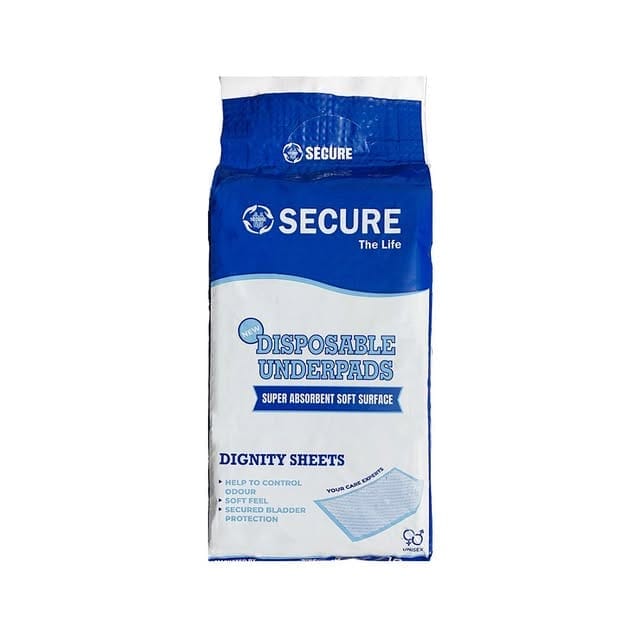
If you have arrived here after searching “dignity sheet” or “D sheet”, you have probably already noticed the confusion: the same item appears in catalogues as an underpad, a bed pad, an incontinence sheet and an intimacy sheet. They are the same thing. This guide explains what the product actually is, where it earns its place on a ward, how to specify it, and what to check before placing a bulk order.
What a Dignity Sheet Actually Is
Physically, a dignity sheet is a layered rectangle of non-woven fabric and plastic film. Ours are built as a high-absorbency non-woven top layer over an absorbent core, with a polyethylene (PE) backing. Each layer does one job:
- Top layer — soft non-woven fabric that sits against the patient's skin and pulls fluid away from it.
- Absorbent core — holds the fluid and locks it away from the surface so the patient is not lying in a wet patch.
- PE backing — a waterproof barrier that stops anything reaching the mattress, trolley or chair underneath.
Good pads add odour control and what manufacturers call secured bladder protection — the core holds its shape when saturated instead of bunching into a wet rope under the patient. That single property is what separates a pad that works for an eight-hour shift from one that has to be changed twice.
Why It Is Called a “Dignity” Sheet
The name describes the second job, not the material. Absorbing fluid is the obvious function. The less obvious one is keeping a patient covered — during catheterisation, a perineal examination, childbirth, or a transfer between bed and trolley. A pad placed correctly means the patient is not exposed to everyone in the room while staff work.
That is why nursing and maternity teams tend to say “dignity sheet” while theatre and CSSD staff say “underpad”. Some wards shorten it further to “D sheet”. If you are writing a tender or a stock list, it is worth including both terms so nobody orders the wrong line item.
Where Dignity Sheets Are Used
Four settings account for most of the volume a hospital gets through.
1. Ward bedside hygiene
The everyday use. A pad under a bed-bound or post-operative patient keeps the mattress dry, reduces linen changes, and cuts the laundry load. For a busy ward the labour saving is usually the bigger number: changing a pad takes a fraction of the time of stripping and remaking a bed, and it does not require moving the patient as much.
2. Operating theatre fluid management
In theatre, underpads catch irrigation fluid, prep solution and blood that escapes the drape. They are used on the table, on trolleys, and on the floor beside the surgeon in high-irrigation cases. Note the distinction: a dignity sheet is a clean single-use product, not a sterile one. It manages fluid outside the sterile field. Inside it, you need a sterile drape — see our surgical drape sets, which include procedure-specific fluid-collection drapes.
3. Incontinence care
For patients with urinary or faecal incontinence, whether in a geriatric ward, a long-stay unit or home care, the pad is the primary line of protection for skin and bedding. Here absorbency and surface dryness matter most: prolonged skin contact with moisture is what leads to moisture-associated skin damage and, eventually, pressure injury.
4. Emergency and transport
In A&E and on ambulance stretchers, pads are used to contain bleeding and vomit during assessment and transfer, and to protect the trolley between patients. Turnaround speed is the priority — a pad is faster to replace than a cleaned and disinfected trolley surface.
Practical note: departments consume these at very different rates. A maternity unit and a geriatric ward will burn through several times what a day-surgery unit uses. Base your reorder level on department-level consumption, not a hospital-wide average.
Choosing Absorbency and Size
Two specifications decide whether a pad performs: the surface area and how much fluid the core holds. Match them to the use, not to the lowest unit price.
- Smaller pads suit examination couches, chairs, trolleys and short procedures where the pad is changed between patients.
- Larger pads suit bed-bound patients, maternity, and any case where fluid volume is unpredictable and the pad must stay in place for hours.
- Higher-absorbency cores are worth the extra unit cost wherever a change requires moving the patient — the labour saved exceeds the difference.
A cheap pad that needs replacing three times as often is not cheaper. The honest way to compare two options is cost per patient-day, including the nursing time to change them, rather than cost per piece.
Our disposable underpads are supplied in multiple sizes, ten pieces per pack. Tell us the department and the use case and we will advise which size fits; for the exact dimensions and absorbency figures of a specific SKU, ask for the product datasheet.
Disposable vs Reusable Underpads
Washable underpads exist and have a place, usually in home care and low-turnover long-stay settings. In a hospital, disposables dominate for reasons that are mostly operational rather than clinical:
- Cross-infection risk — a soiled reusable pad has to be collected, transported, laundered at the correct temperature and returned. Every step is a handling point.
- Laundry capacity — heavily soiled pads are among the most demanding items a hospital laundry processes, and they wear out fast.
- Predictability — a disposable performs the same on its first use as on any other. A reusable pad loses absorbency with every wash, and there is rarely a system tracking how many washes a given pad has had.
- Cost visibility — the disposable unit price is the whole cost. The reusable price is the pad plus laundry, transport, shrinkage and replacement.
Where reusables do win is in stable home-care situations with a predictable, moderate fluid load and a washing machine on site.
What to Check Before You Buy
Underpads are a commodity in appearance and very much not one in performance. Five checks separate a supplier worth using from one that is not:
- DRAP registration. Ask for the registration number, not a general assurance. Our disposable underpads are DRAP-registered under MDIE-0001249, and we supply the certificate on request.
- Manufacturing standard. Ask where the product is made and to what quality system. Ours are sourced from ISO 13485:2016-certified manufacturers in China and inspected on arrival at our Lahore warehouse.
- A physical sample. Pour a measured volume of water onto the pad, wait, then press a paper towel to the surface. If the towel comes away wet, the core is not holding fluid away from the skin.
- Backing integrity. Stretch the PE backing at a corner. Thin backing splits under a patient's weight, which defeats the entire purpose.
- Pack and carton counts. Confirm pieces per pack and packs per carton before comparing prices — a “cheaper” quote is often a smaller pack.
Buying Dignity Sheets in Bulk in Pakistan
For a hospital or distributor, the practical route is to buy from a DRAP-registered importer holding local stock rather than importing small quantities directly. Direct import means an establishment licence, product registration and customs clearance for what is usually a low-value, high-volume line — the paperwork rarely justifies the margin. If you are considering it anyway, our DRAP import licence guide sets out what is involved, and the wholesale business guide covers the Drug Sale Licence route.
When you request a quotation, give the supplier the department, the approximate monthly consumption and the sizes you want. That is enough to price properly and to advise whether a higher-absorbency line would cost you less overall.
Quick Takeaways
- A dignity sheet and a disposable underpad are the same product under different names.
- Construction is a non-woven top layer, an absorbent core, and a waterproof PE backing.
- The name refers to keeping a patient covered during intimate care, not to the material.
- Main uses: ward bedside hygiene, theatre fluid management, incontinence care, and emergency transport.
- Standard pads are clean and single-use, not sterile — use a sterile drape inside the sterile field.
- Compare cost per patient-day, not cost per piece.
- Always ask for the DRAP registration number and test a physical sample before committing to volume.
FAQs
1. What is a dignity sheet?
A single-use absorbent pad placed underneath a patient to absorb urine, blood or irrigation fluid, keep the bed dry and keep the patient covered during examination or transfer. Hospitals also list it as a disposable underpad.
2. Why is it called a dignity sheet?
Because of its second function. Beyond absorbing fluid it keeps a patient covered during catheterisation, perineal examination, childbirth and transfers. The term describes the purpose rather than the material, which is why nursing teams adopted it.
3. What is the difference between a dignity sheet and an underpad?
None in practice. Dignity sheet, underpad, bed pad, D sheet and intimacy sheet all describe the same disposable absorbent pad. The term used usually depends on the department.
4. Are dignity sheets sterile?
Standard dignity sheets are clean and single-use rather than sterile, which is appropriate for bedside hygiene, incontinence care and transport. Where a sterile field is required, use a sterile drape from a procedure-specific drape set.
5. How do I buy dignity sheets in bulk in Pakistan?
Ask for the DRAP registration number, confirm pieces per pack and packs per carton, and test a sample for surface dryness and backing strength before ordering volume. We hold DRAP-registered disposable underpads in stock in Lahore and supply hospitals and distributors nationwide.
Need dignity sheets for your ward?
We supply DRAP-registered disposable underpads / dignity sheets in bulk to hospitals, clinics and distributors across Pakistan, from stock in Lahore. Tell us your department and monthly volume and we will quote and recommend a size.
Related Guides
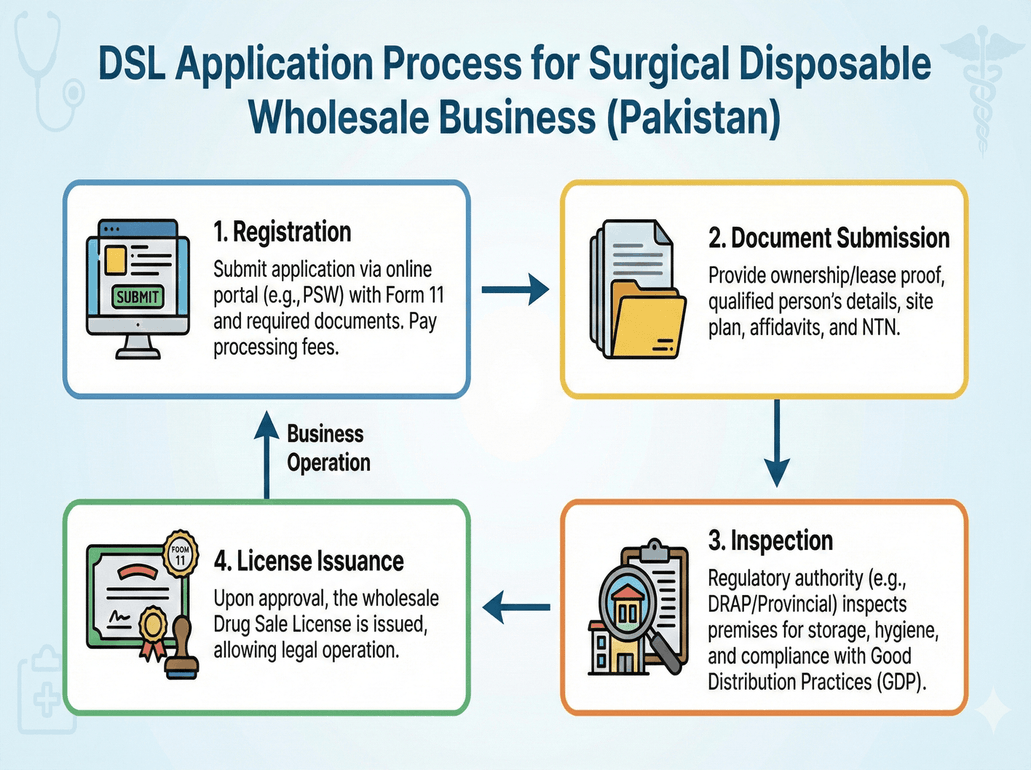
Who needs a Drug Sale License, how Form 11 differs from Form 9, the documents and pharmacist requirement, what a Drug Inspector checks, and how the DSL fits with DRAP licensing.
Read Guide →Learn the step-by-step process of starting a wholesale business (DSL Form 11) and navigating local regulations effectively.
Read Guide →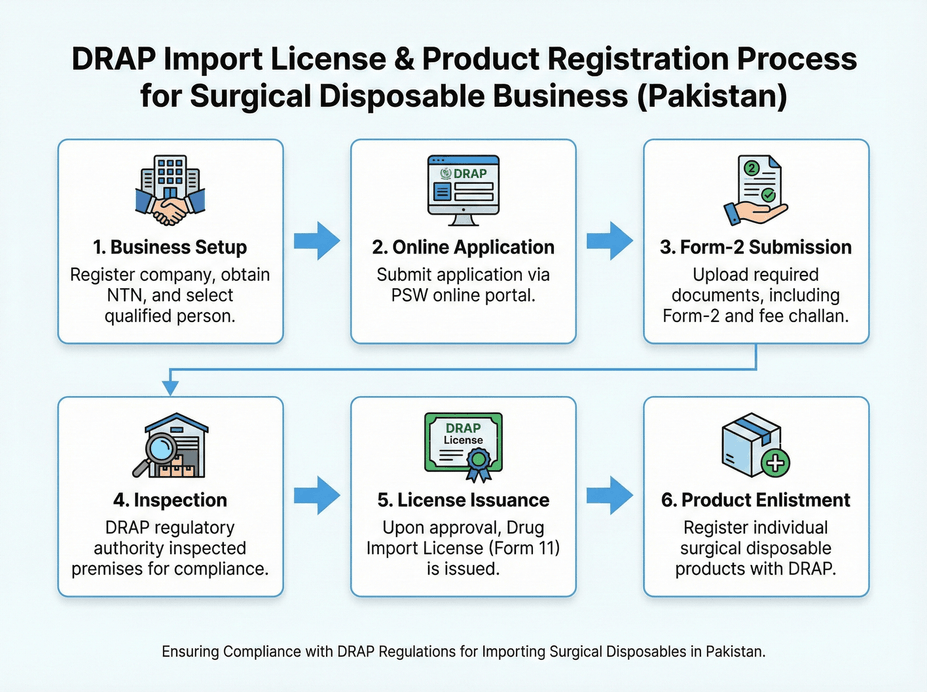
A practical guide on securing the Establishment License to Import (Form-2) and product registration for surgical disposables.
Read Guide →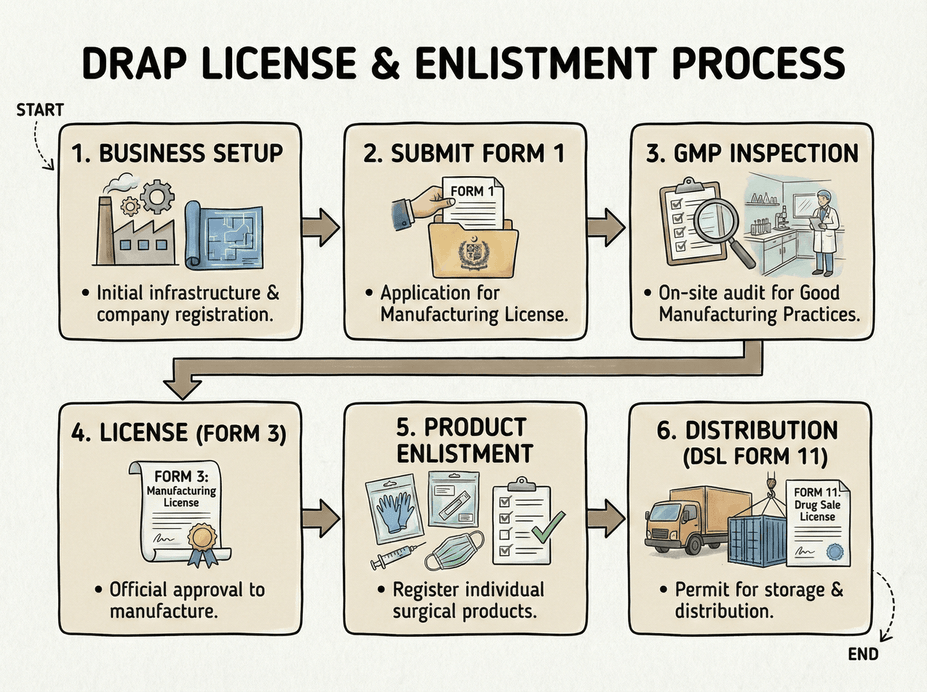
Start your manufacturing unit with our guide on DRAP Manufacturing License (Form 1) and product enlistment.
Read Guide →