Drug Sale License (DSL) in Pakistan: The Complete Form 11 Guide
The Drug Sale License is the licence that lets a business legally sell, store or exhibit drugs and therapeutic goods for sale in Pakistan. If you distribute surgical disposables to hospitals, this is the licence you need, and it is issued on Form 11.
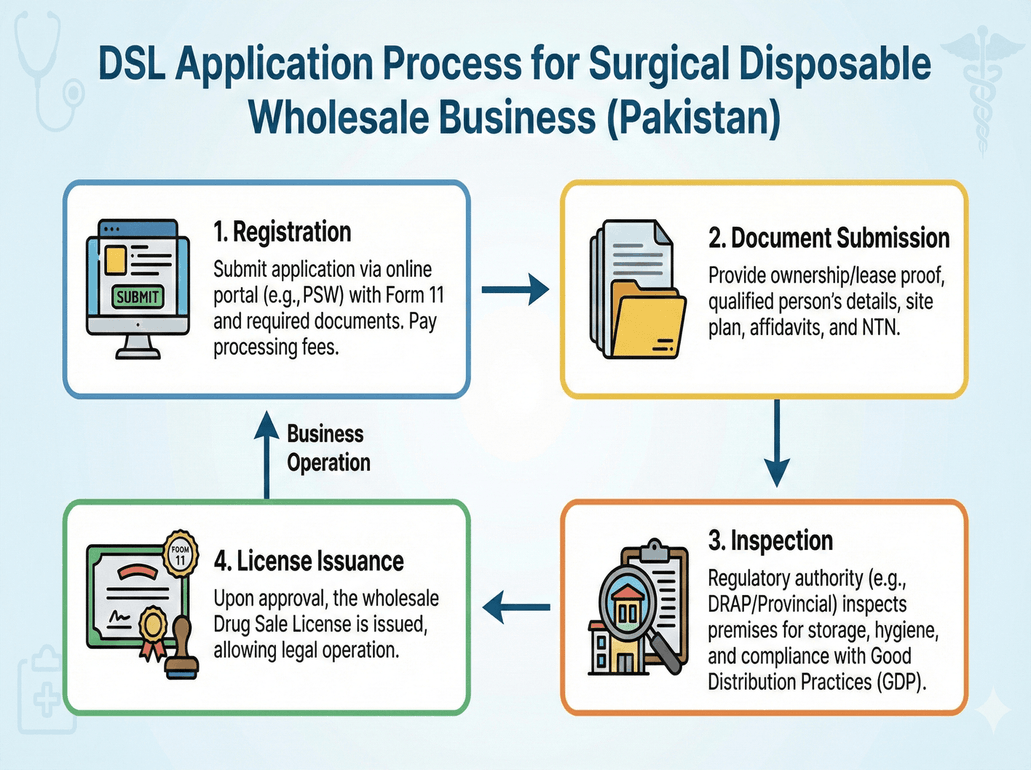
The DSL is one of the most-asked-about licences in Pakistan's medical supply trade, and one of the most misunderstood — largely because it is provincial while most of the regulatory noise around medical devices is federal. This guide separates the two, walks through the Form 11 application in order, and flags the points where applications most often stall.
Before you start: fee schedules, processing times and document checklists differ by province and are revised periodically. Treat everything below as the shape of the process, and confirm current figures with your provincial drug control authority before you budget or commit to a timeline.
What a Drug Sale License Covers
A DSL authorises the holder to sell, store or exhibit drugs and therapeutic goods for sale from a specified premises. Three things about that sentence matter in practice:
- It is tied to a premises, not to a company. Move your warehouse and the licence does not automatically move with you.
- It covers storage as well as sale. Holding stock without a licence is itself the problem, even if you have not sold anything yet.
- It is a sale licence, not a product approval. It says nothing about whether the items you stock are legal. That is a separate question, answered by DRAP registration or enlistment.
Who Needs One
You need a DSL if you sell or store drugs or therapeutic goods for sale. In the surgical disposables trade that covers:
- Wholesalers and distributors supplying hospitals, clinics, diagnostic centres and retailers.
- Importers who also sell locally — the DRAP import licence covers bringing goods in; the DSL covers selling them.
- Manufacturers who distribute their own output rather than selling exclusively through a licensed distributor.
- Retail pharmacies and medical stores, though these fall under the retail category rather than wholesale.
You generally do not need one to be an end user. A hospital buying disposables for its own clinical use is consuming them, not selling them.
Form 11 vs Form 9: Which Applies
This is the single most common point of confusion, and getting it wrong means starting the application again.
- Form 11 — the application for a licence to sell, store or exhibit drugs by wholesale or distribution. This is what a surgical disposables distributor selling to institutions applies on, and the licence itself is issued on Form 11.
- Form 9 — applies to retail and pharmacy setups, which carry their own qualified-supervision requirements.
If you are selling to hospitals and other businesses, you want Form 11. If you are selling to the public over a counter, you are in Form 9 territory. Businesses doing both should raise it explicitly with the provincial authority rather than assuming one licence stretches to cover the other.
Note on terminology: you will see “DSL number” used for the licence number printed on the issued Form 11, and “DML” for a Drug Manufacturing Licence — a different licence entirely, covering production rather than sale. See our manufacturing licence guide if that is what you are after.
Provincial vs Federal: Who Issues What
Pakistan splits medical-supply regulation between two levels, and applicants routinely lose weeks approaching the wrong one.
- Provincial — the Drug Sale License. Issued by the provincial health or drug control authority, applied for through that province's portal or office, and enforced by provincial Drug Inspectors. Punjab, Sindh, KP, Balochistan and ICT each run their own process.
- Federal (DRAP) — establishment licences to import (Form-2) or manufacture (Form 1), plus product registration and enlistment under the Medical Devices Rules 2017.
A distributor importing surgical disposables and selling them to hospitals typically needs both: a DRAP establishment licence and product enlistment at federal level, and a DSL at provincial level. They are applied for separately and do not substitute for one another.
The federal side has published, fixed figures. Schedule C of the Medical Devices Rules, 2017 sets an establishment licence to import at Rs. 20,000 (renewal Rs. 10,000) and to manufacture at Rs. 100,000 (renewal Rs. 50,000), with Class A device enlistment at Rs. 5,000. Both establishment licences and product enlistments run for five years. The provincial DSL side is where figures vary and are harder to pin down — which is precisely why you should get them from your own province rather than from a guide.
If you operate warehouses in more than one province, expect to license each of them.
Step 1: Register the Business and Secure Premises
Before the licence application, you need the business itself in order: a registered entity (sole proprietorship, partnership or company), an NTN, and a bank account in the business name.
Premises matter more than most applicants expect, because an inspector will visit. A drug warehouse needs adequate storage space, protection from direct sunlight and damp, shelving that keeps stock off the floor, and separation between saleable stock and anything expired or returned. If any of your lines require cold storage, you need a working, monitored cold chain — not a domestic refrigerator.
Step 2: Appoint the Qualified Person
The application requires a named qualified person responsible for supervision — a pharmacist or a registered dispenser depending on the licence category, registered with the Pharmacy Council.
Two practical points. First, this person must be genuinely available to the business; a name on paper with no presence is a well-known enforcement target. Second, if they leave, the licence condition is no longer satisfied — appoint a replacement and notify the authority rather than waiting for the next inspection to surface it.
Step 3: Prepare the Documents
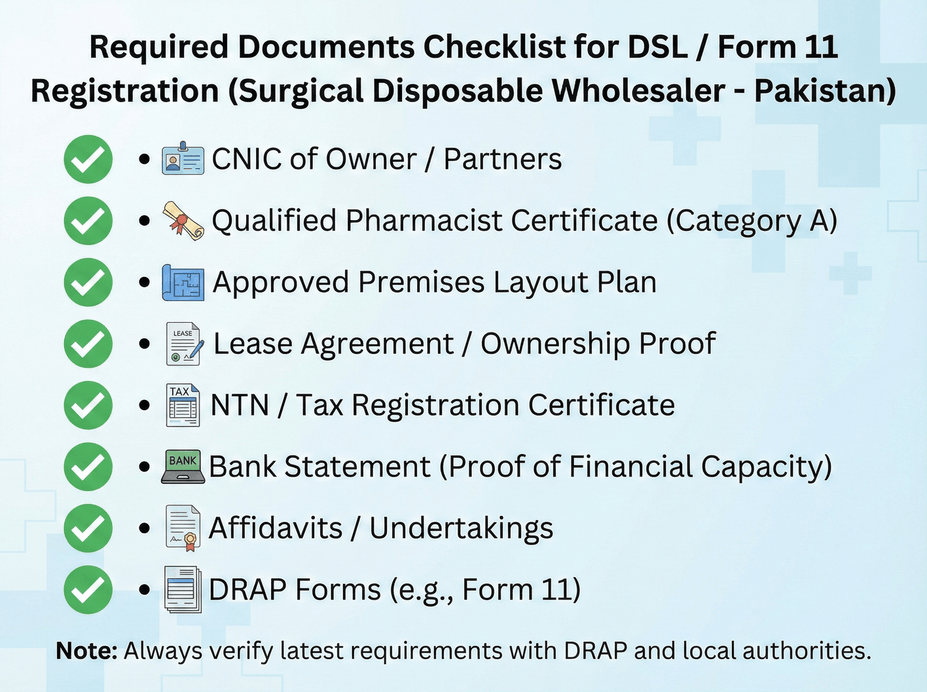
Checklists vary by province, but a Form 11 application generally requires:
- Completed Form 11 application.
- CNIC copies and photographs of the applicant or partners or directors.
- Business registration documents and NTN certificate.
- Pharmacist or dispenser registration with the Pharmacy Council, plus their consent or appointment letter.
- Premises plan or layout, with dimensions, and proof of tenancy or ownership.
- Affidavit of compliance with the Drugs Act, usually on stamp paper.
- Fee payment proof — a challan or receipt in the prescribed form.
Our wholesale business guidenotes application fees commonly falling in the region of Rs. 5,000–10,000, but this varies by province and licence category and is revised from time to time. Confirm the current figure and payment method with your provincial authority before submitting — a challan paid to the wrong head is a common cause of rejection.
Step 4: Submit the Application
Most provinces now accept Form 11 applications through an online portal. The usual sequence:
- Register on the provincial portal and create the business profile.
- Complete the online application: business name, premises address, licence category, and the qualified person's details.
- Upload the scanned document set.
- Pay the fee and upload proof.
- Submit and record the tracking or reference number.
Scan quality is a genuine cause of delay. Upload clear, complete, correctly oriented documents; an illegible premises plan sends the file back to you rather than forward to an inspector.
Step 5: The Drug Inspector's Inspection
A Drug Inspector visits the premises to confirm that what you described on paper exists in reality. Expect them to look at:
- Whether the premises match the submitted plan and address.
- Storage conditions — space, shelving, ventilation, protection from sunlight and damp, cold chain if applicable.
- Segregation of expired, damaged or returned stock from saleable stock.
- Whether the qualified person is present and can answer for the operation.
- Record-keeping: purchase and sale registers, and traceability from supplier to customer.
Applicants most often come unstuck on two things: an absent qualified person, and no record system in place because they assume records only start once the licence is granted. Have both ready before the visit.
Step 6: Issuance, Display and Records
On approval the licence is issued on Form 11, carrying the licence number your customers will ask for. Once you have it:
- Display the licence at the licensed premises.
- Keep purchase and sale records that let any batch be traced from the supplier who sold it to you through to the customer who bought it.
- Buy only from licensed sources, and keep the invoices that prove it.
- Stock only DRAP-registered or enlisted products. A valid DSL does not make an unregistered device legal to sell.
Our wholesale business guide puts typical DSL processing at roughly one to three months depending on the province and how quickly inspection is scheduled. Treat that as a planning assumption rather than a commitment, and do not sign supply contracts against a date you do not control.
Step 7: Renewal and Staying Compliant
A DSL is granted for a fixed period and must be renewed. The renewal cycle, fee and window are set provincially and change from time to time, so confirm yours with the issuing authority and diarise the date — a lapsed licence means stock you cannot legally sell or store, not merely a late fee.
Between renewals, the events that require you to notify the authority are the predictable ones: a change of premises, a change of ownership or partners, a change of qualified person, or ceasing operations. Renewal is also when weak record-keeping tends to surface, since inspectors reviewing a renewal will look at the registers you have been keeping all along.
How the DSL Fits with DRAP Licensing
For a surgical disposables business, the licences stack in a predictable order:
- Selling locally, sourcing from local importers or manufacturers — a DSL on Form 11 is the licence you need. Verify that everything you stock is DRAP-registered or enlisted.
- Importing yourself — add a DRAP establishment licence to import (Form-2) plus product registration or enlistment. See the DRAP import licence guide.
- Manufacturing — a DRAP establishment licence to manufacture (Form 1), product enlistment, and GMP compliance. See the manufacturing licence guide.
Most businesses start at the first step. It is the fastest route to trading legally, and it does not commit you to the capital or the compliance overhead of importing or manufacturing before you know your market.
Quick Takeaways
- The DSL is a provincial licence to sell, store or exhibit drugs and therapeutic goods for sale.
- Form 11 is wholesale and distribution; Form 9 is retail and pharmacy.
- It is tied to a specific premises — licence every warehouse, in every province.
- A registered qualified person must be named and genuinely available.
- A Drug Inspector will inspect storage, segregation and records before issuance.
- A DSL permits sale; it does not make an unregistered product legal. Products still need DRAP registration or enlistment.
- Fees, timelines and renewal cycles are provincial and change — confirm current figures with your authority.
FAQs
1. What is a Drug Sale License (DSL)?
The provincial licence permitting a business to sell, store or exhibit drugs and therapeutic goods for sale from specified premises. Wholesale and distribution licences are issued on Form 11.
2. What is the difference between Form 11 and Form 9?
Form 11 is the wholesale and distribution licence, used when selling to hospitals, clinics and other institutions. Form 9 relates to retail and pharmacy setups with their own supervision requirements. A surgical disposables distributor applies on Form 11.
3. Do I need a pharmacist to get a DSL?
Yes. A qualified person — a pharmacist or registered dispenser depending on the category — must be registered with the Pharmacy Council and named on the application as responsible for supervision. They need to be genuinely available to the business, not a name on a form.
4. Is the DSL issued by DRAP or by the province?
By the province. Provincial health and drug control authorities issue and enforce the DSL. DRAP operates federally and handles establishment licences to import or manufacture, plus product registration and enlistment. Importers and manufacturers who also sell locally need both.
5. Do surgical disposables need a Drug Sale License?
For local wholesale of surgical disposables classified as medical devices, the DSL is the licence covering sale and storage; no separate DRAP wholesale licence is needed unless you import. The products themselves must still be DRAP-registered or enlisted.
6. How long does a DSL take to obtain?
Our wholesale guide puts it at roughly one to three months, driven mainly by how quickly inspection is scheduled. It varies by province, and online portals have shortened the submission stage. Confirm current timelines with your provincial authority.
Licensed and looking for stock?
Once your DSL is in place, the next question is what to put on the shelves. We supply DRAP-registered surgical disposables in bulk to licensed distributors across Pakistan, with registration certificates provided for every line.
Sources
Fees, validity periods and form numbers on this page are taken from the documents below. DRAP revises fee schedules and procedures from time to time — verify current figures against the primary source before you budget or apply.
- Medical Devices Rules, 2017 (full text, PDF) — Drug Regulatory Authority of Pakistan. Notified 16 January 2018. Fee schedule at Schedule C (see rule 63); application forms at Form-1, Form-2, Form-6, Form-6A, Form-7 and Form-7A.
- Medical Devices Establishment Licences — DRAP. Licence categories and the five-year validity period.
- Medical Devices — Application Process — DRAP. Application route and the Medical Device Board as competent authority.
- MDMC online licensing system (e.dra.gov.pk) — DRAP's online portal for establishment licence and product applications.
Related Guides
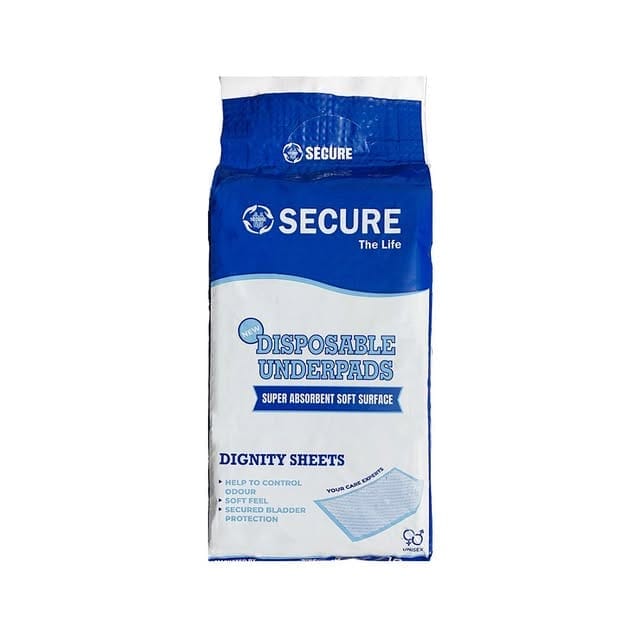
What a dignity sheet is, why it has that name, where it is used on the ward and in theatre, how to specify absorbency and size, and what to check before buying in bulk.
Read Guide →Learn the step-by-step process of starting a wholesale business (DSL Form 11) and navigating local regulations effectively.
Read Guide →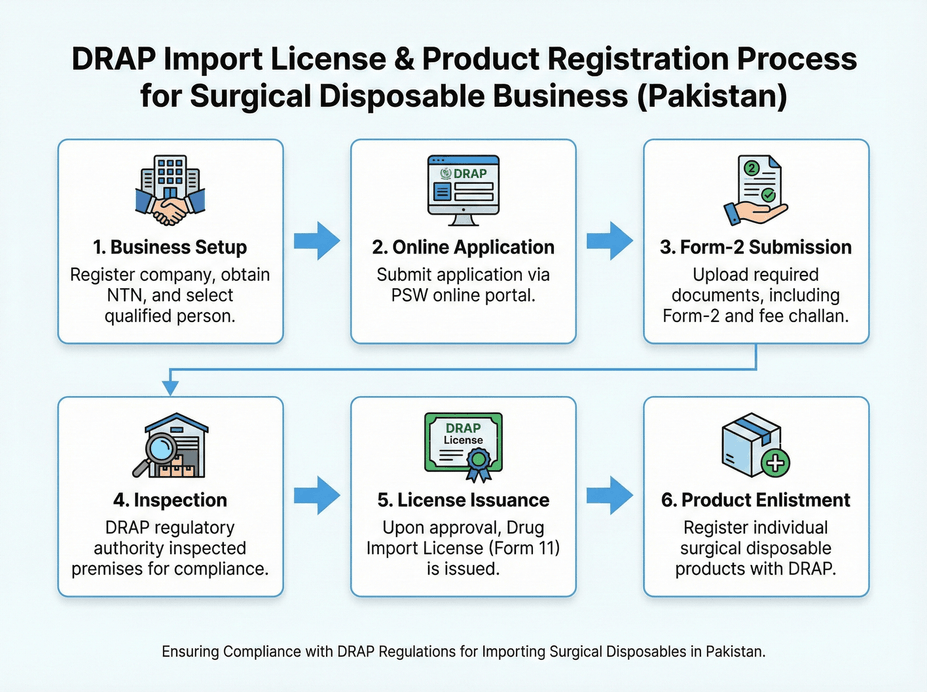
A practical guide on securing the Establishment License to Import (Form-2) and product registration for surgical disposables.
Read Guide →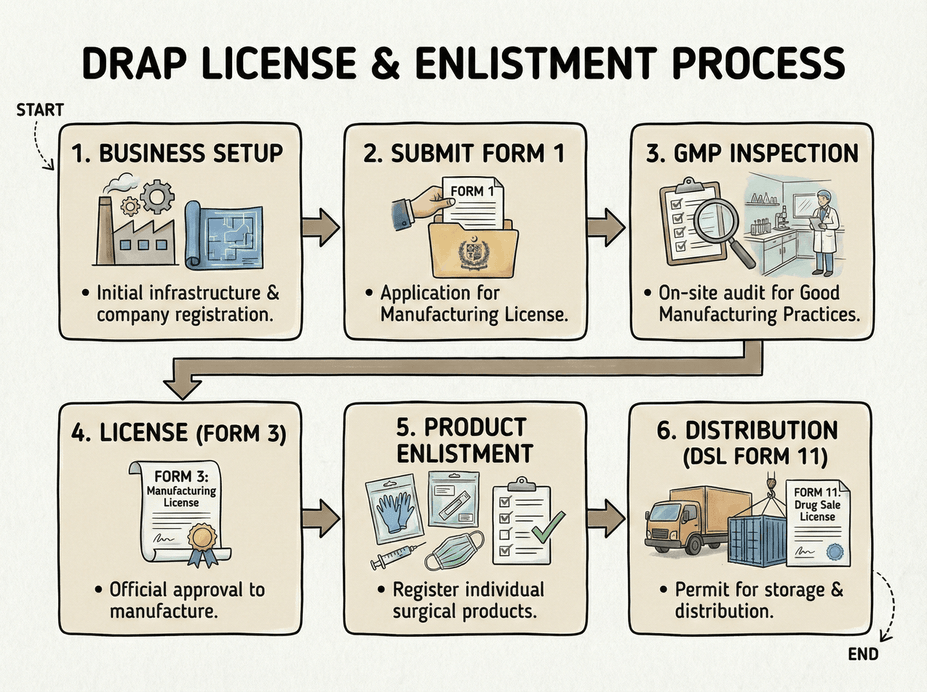
Start your manufacturing unit with our guide on DRAP Manufacturing License (Form 1) and product enlistment.
Read Guide →