
How to Obtain DRAP Manufacturing License and Product Registration for Surgical Disposable Business in Pakistan
The surgical disposable business in Pakistan is a promising sector for manufacturing key items like disposable syringes, surgical gloves, face masks, IV sets, catheters, bandages, and other single-use medical devices.
Local manufacturing helps meet domestic healthcare needs, reduces import costs, and supports export opportunities in the expanding healthcare landscape.
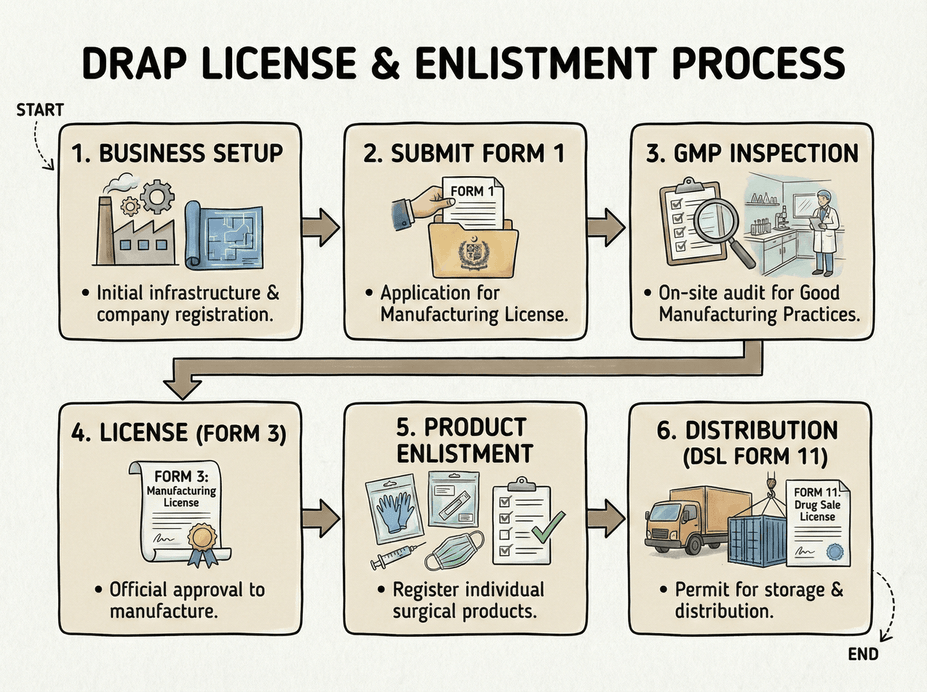
This guide outlines the process for starting as a manufacturer under Drug Regulatory Authority of Pakistan (DRAP) regulations. For legal manufacturing and sale of surgical disposables (classified as medical devices per the Medical Devices Rules 2017, with some under Schedule E like disposable syringes treated with special requirements), secure an Establishment License to Manufacture via Form 1. Follow with product registration or enlistment.
Note: Manufacturing requires Form 1, but not Form 2 (which is for import). For distribution, obtain a DSL using Form 11 (as the license is issued on Form 11).
Unique insight: For Schedule E items like disposable syringes, which were previously regulated as drugs, manufacturers can apply existing DML knowledge, now under medical devices. Early GMP certification can speed up approvals and open exports to markets requiring ISO 13485.
Why Start Manufacturing Surgical Disposables in Pakistan?
Pakistan's healthcare market is growing, with steady demand for affordable surgical disposables in hospitals and clinics. Manufacturing offers supply chain control, job creation, and the ability to price against imports rather than alongside them. Margins vary widely by product line, scale and input costs — build your own costing rather than working from a headline figure.
Legal Framework for Manufacturing Medical Devices
Governed by DRAP Act 2012 and Medical Devices Rules 2017 (amended), the Medical Devices Division handles licensing. Requirements include Establishment License to Manufacture (5 years validity) and product enlistment (Class A) or registration (higher classes). Schedule E items (e.g., disposable syringes, catheters) require immediate compliance without exemption.
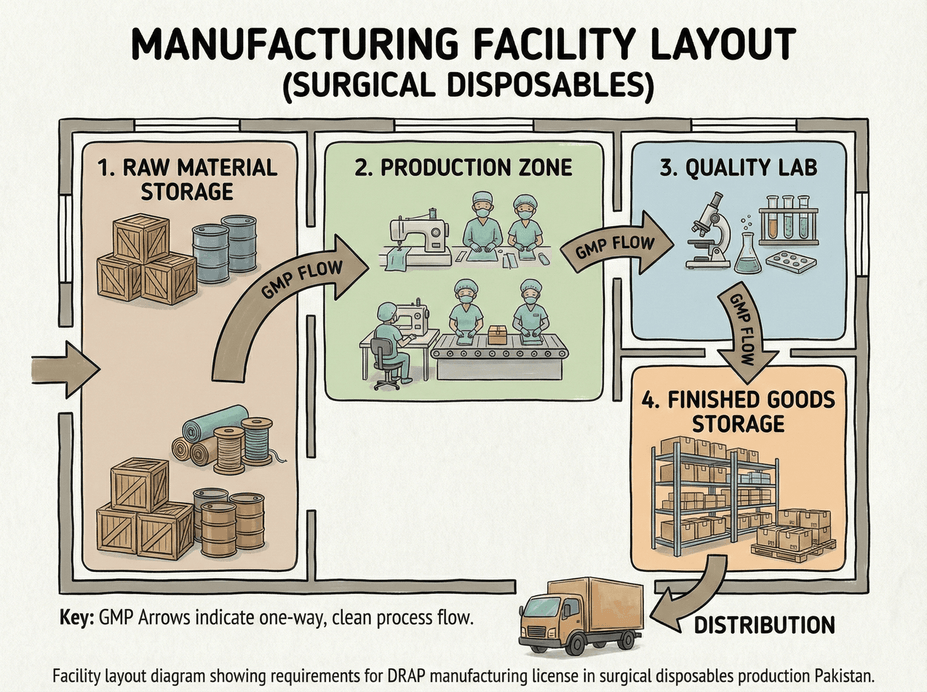
Step 1: Business and Facility Preparation Before Applying
Set up properly:
- Register as a private limited company (SECP) for scale.
- Get NTN, sales tax (FBR), and local approvals.
- Acquire facility with separate zones for production, quality control, storage, sterilization (GMP standards: clean rooms, HVAC).
- Install machinery (e.g., injection molding for syringes).
- Hire qualified staff: Production in-charge with pharmacy/biomedical degree and 4+ years experience.
Step 2: Applying for Establishment License to Manufacture (DRAP Manufacturing License)
Foundational step, issued by Medical Device Board (MDB).
Process:
- Register on MDMC Online System (e.dra.gov.pk).
- Submit online application for Establishment License to Manufacture.
- Fill Form 1 (Application for Grant or Renewal of an Establishment License to Manufacture Medical Devices).
- Upload documents (checklist below).
- Submit hard copy to Medical Devices Division, DRAP.
- Pay the prescribed fee — Rs. 100,000 for an establishment licence to manufacture medical devices (Schedule C, Medical Devices Rules, 2017).
- Undergo GMP inspection by DRAP panel.
- MDB approval and issuance on Form 3.
Prescribed fees for local manufacturers
Set out in Schedule C of the Medical Devices Rules, 2017 (see rule 63). All figures in Pakistani Rupees:
| Activity | Fee | Renewal |
|---|---|---|
| Establishment licence to manufacture medical devices | Rs. 100,000 | Rs. 50,000 |
| Enlistment of a Class A device (local manufacture) | Rs. 5,000 | Rs. 5,000 |
| Registration of a Class B, C or D device (local manufacture) | Rs. 20,000 | Rs. 10,000 |
| Enlistment or registration of an accessory or component | Rs. 5,000 | Rs. 5,000 |
| Export permit | Rs. 1,000 | Rs. 1,000 |
Note the gap between the two routes: manufacturing costs five times what an import licence costs (Rs. 100,000 against Rs. 20,000), and registering a Class B–D device locally is cheaper than registering the same device as an importer. A change in particulars of a licensed establishment is charged at fifty percent of the licensing fee. Both the licence and the product enlistment or registration are valid for five yearsfrom issuance unless earlier suspended or cancelled. Fee schedules are revised periodically — confirm the current Schedule C before budgeting.
Tip: For Schedule E items like disposable syringes, ensure extra documentation on safety (e.g., auto-disable features) to avoid delays.
Step 3: Required Documents for DRAP Manufacturing License Application
Include:
- CNIC/photos of owners.
- Business registration (SECP/NTN).
- Premises layout, ownership/lease.
- List of surgical disposables to manufacture.
- Technical staff qualifications/experience.
- Undertaking on stamp paper (per Form 1).
- Fee proof.
- GMP outline.
Step 4: Product Enlistment/Registration After Manufacturing License
Apply for each product:
- Class A (e.g., surgical gloves): Enlistment via Form 6 (local manufacture).
- Higher classes/Schedule E (e.g., disposable syringes): Registration via appropriate forms.
Submit device specs, manufacturing process, quality data, labeling. No exemption for Schedule E. Register immediately.
Unique insight: For disposable syringes, highlight compliance with WHO pre-qualification standards in applications to stand out and access government tenders.
Step 5: Obtaining Drug Sale License (DSL) for Distribution
For distributing manufactured surgical disposables, obtain DSL (wholesale type) via Form 11, as manufacturing license covers production but distribution often requires DSL for sale.
Use Form 11 for the license (application via provincial portals, e.g., Punjab).
Process:
- Apply on provincial portal.
- Submit documents: Business details, pharmacist registration, premises plan.
- Inspection.
- Issuance on Form 11.
Step 6: Implementing Good Manufacturing Practices (GMP)
Comply with DRAP GMP:
- Cleanroom validation.
- ISO 13485 quality system.
- Batch records, audits.
Ongoing inspections.
Step 7: Production, Quality Control, and Market Launch
Post-approvals:
- Implement production with FIFO, packaging.
- In-house testing.
- Market to hospitals, use online catalog.
Pro tip: For Schedule E items, integrate auto-disable features to meet DRAP bans on conventional syringes.
Step 8: Challenges and Best Practices
- Costs (Rs. 50-100 lakhs initial).
- Inspection delays: Prepare GMP early.
- Updates: Monitor DRAP for Schedule E changes.
Quick Takeaways
- Use Form 1 for DRAP manufacturing license, not Form 2 (import).
- Secure product enlistment/registration immediately for Schedule E items like disposable syringes.
- Obtain DSL on Form 11 for distribution.
- Prepare GMP-compliant facility for inspection.
- Use online portal for faster submissions.
- Start with high-demand items like syringes for quick revenue.
FAQs
1. What form is used for DRAP manufacturing license for surgical disposables?
Form 1 is for the establishment license to manufacture medical devices. Submit via MDMC system, followed by hard copy.
2. Is Form 2 required for manufacturing surgical disposables?
No. Form 2 is for import. Manufacturing uses Form 1, but Form 11 for DSL in distribution.
3. Do Schedule E items like disposable syringes need immediate registration?
Yes, no exemption. Use enlistment (Form 6) or registration for low-risk, with full compliance.
4. Why need DSL Form 11 for manufacturing business?
For distribution/sale of manufactured surgical disposables, DSL on Form 11 is required for wholesale.
5. How long for DRAP manufacturing license approval?
Up to 180 days, including GMP inspection; digital submissions accelerate it.
Start Manufacturing Today
Ready to begin? Starting manufacturing in the surgical disposable business in Pakistan requires the DRAP manufacturing license via Form 1.
Sources
Fees, validity periods and form numbers on this page are taken from the documents below. DRAP revises fee schedules and procedures from time to time — verify current figures against the primary source before you budget or apply.
- Medical Devices Rules, 2017 (full text, PDF) — Drug Regulatory Authority of Pakistan. Notified 16 January 2018. Fee schedule at Schedule C (see rule 63); application forms at Form-1, Form-2, Form-6, Form-6A, Form-7 and Form-7A.
- Medical Devices Establishment Licences — DRAP. Licence categories and the five-year validity period.
- Medical Devices — Application Process — DRAP. Application route and the Medical Device Board as competent authority.
- MDMC online licensing system (e.dra.gov.pk) — DRAP's online portal for establishment licence and product applications.
Related Guides
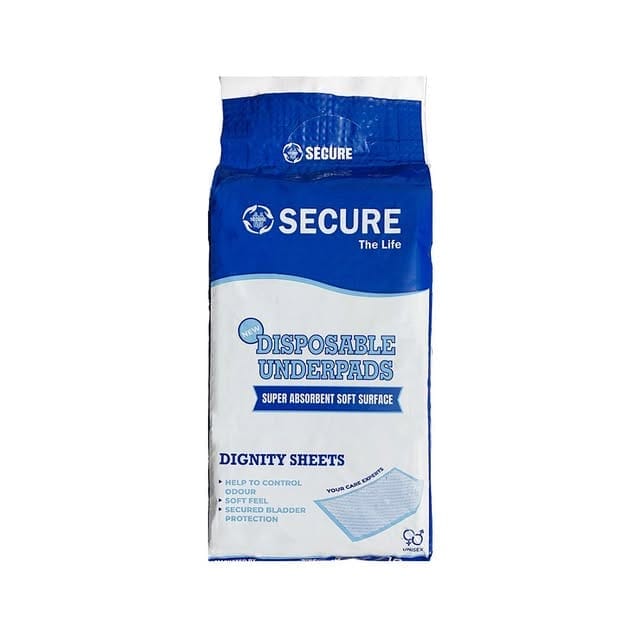
What a dignity sheet is, why it has that name, where it is used on the ward and in theatre, how to specify absorbency and size, and what to check before buying in bulk.
Read Guide →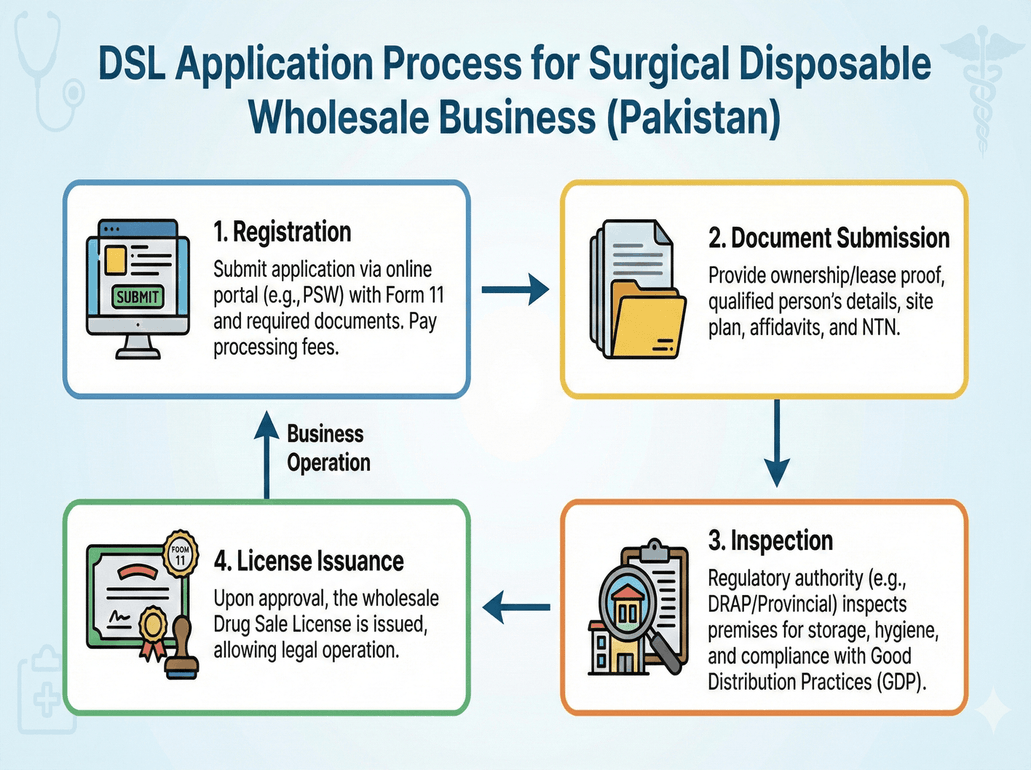
Who needs a Drug Sale License, how Form 11 differs from Form 9, the documents and pharmacist requirement, what a Drug Inspector checks, and how the DSL fits with DRAP licensing.
Read Guide →Learn the step-by-step process of starting a wholesale business (DSL Form 11) and navigating local regulations effectively.
Read Guide →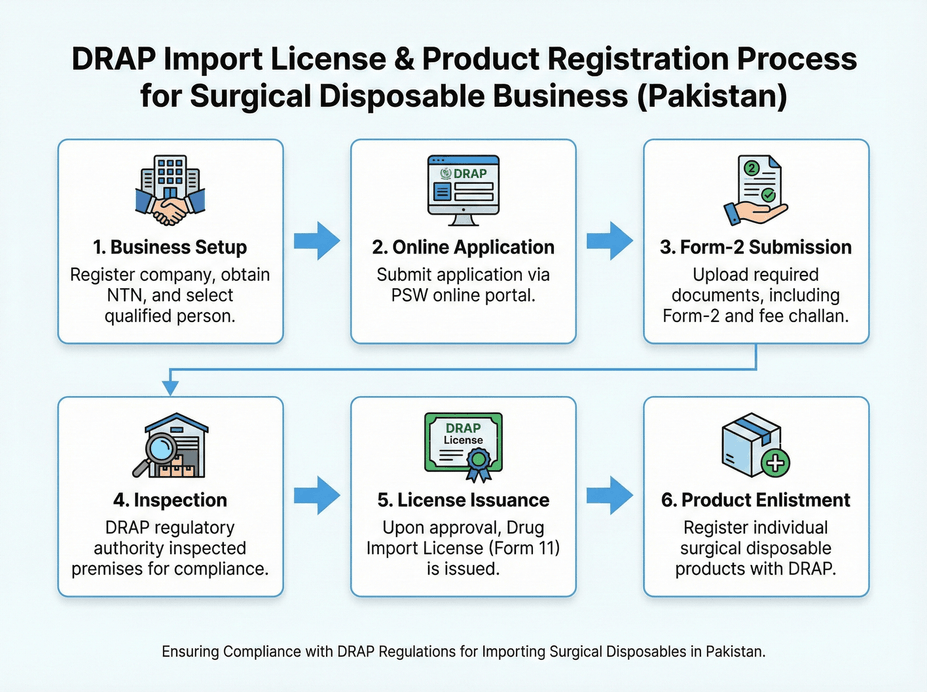
A practical guide on securing the Establishment License to Import (Form-2) and product registration for surgical disposables.
Read Guide →